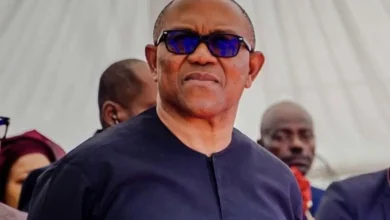

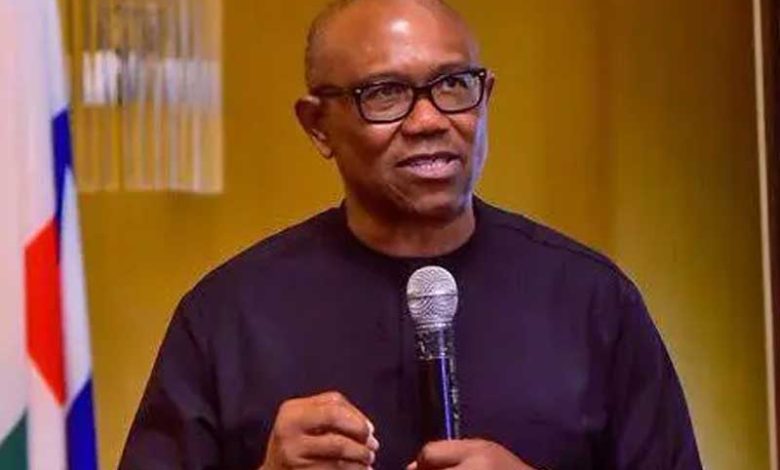
Presidential candidate of the Nigeria Democratic Congress (NDC), Peter Obi, has said he would remain firmly in charge of his administration if elected president in the 2027 general election.
Obi made the statement while discussing the administration of former President Muhammadu Buhari, particularly its handling of corruption and governance.
The former Anambra State governor said his leadership approach would differ from Buhari’s, insisting that a president must maintain direct control over government affairs.
Speaking in an interview with the BBC, Obi said Buhari was not sufficiently in charge of his administration.
“He was not in charge. The difference is that I would be in charge,” Obi said.
The statement comes as political parties and presidential candidates intensify preparations for the 2027 presidential election.
Obi has made corruption, economic management, accountability and social welfare central issues in his political campaign.
He argued that effective leadership requires the president to exercise stronger oversight over government officials and policies.
According to Obi, corruption remains one of Nigeria’s major challenges and affects the country’s ability to effectively manage public resources.
He linked the issue to the controversial fuel subsidy system, arguing that corruption, rather than subsidy itself, was the fundamental problem.
“If you are not stealing, if you are not involved, and your wife and family are not involved, then you reduce it by 50 per cent,” Obi said.
The NDC candidate said his administration would seek to eliminate corruption associated with the subsidy system if elected.
Obi also reiterated his position that he would restore the fuel subsidy after taking office.
Nigeria removed the petrol subsidy in 2023 under President Bola Tinubu, changing the country’s fuel pricing structure and triggering widespread debate over the economic impact of the policy.
Obi said he would approach the issue differently by addressing what he described as corruption within the subsidy arrangement.
“If I win, I’ll bring back the fuel subsidy and remove the corruption,” he said.
He maintained that removing corruption from the system would help ensure that government resources reach their intended beneficiaries.
Obi’s comments also represent a direct contrast with Buhari’s eight-year presidency, which began in 2015 and ended in 2023.
Buhari came to power on an anti-corruption platform, with his administration identifying the fight against corruption as one of its major priorities.
However, the former president’s government faced criticism over several issues, including insecurity, economic hardship and concerns about the effectiveness of its anti-corruption efforts.
Obi said his own administration would involve greater presidential control over government operations.
His comments are likely to feature prominently in the political debate ahead of the 2027 election, particularly as opposition candidates seek to present different approaches to governance.
The former Anambra governor previously contested the 2023 presidential election under the Labour Party before moving to the NDC for the next election cycle.
He has continued to campaign on issues including economic reform, accountability, improved public services and tackling corruption.
The fuel subsidy debate is also expected to remain an important issue in the 2027 political contest as Nigerians continue to deal with the consequences of changes to petrol pricing.
Obi’s promise to restore the subsidy while eliminating corruption surrounding its implementation provides a clear outline of his proposed approach to the issue.
His latest comments also underline his emphasis on presidential authority and direct involvement in government decision-making.
With the 2027 election approaching, political parties and candidates are expected to intensify their campaigns around the economy, corruption, fuel prices, security and public accountability.
Obi’s comparison with Buhari therefore adds another dimension to the growing debate over the type of leadership Nigerians should expect from presidential candidates seeking the country’s top political office.